Best Perimenopause Supplements NZ: An Honest Guide (2026)
July 29, 2026
If you're waking at 3am, snapping at people you love, or wondering why your body suddenly feels unfamiliar, you're likely among the thousands of New Zealand women navigating perimenopause. The good news: certain botanicals and nutrients have real evidence behind them. The catch: the supplement aisle is noisy, and not everything on the shelf deserves your money.
Here's how to choose, what to look for, and an honest look at the main options available in NZ, including our own.
What is perimenopause, and why do supplements help some women?
Perimenopause is the transition phase before menopause, usually starting in your 40s (sometimes late 30s), when estrogen and progesterone begin to fluctuate rather than decline smoothly. Those fluctuations drive the classic symptoms: disrupted sleep, mood swings, irregular cycles, brain fog, cravings and fatigue.
Supplements don't replace hormones. What the good ones do is support your body's own regulation, using botanicals with traditional use and emerging clinical evidence. For some women that's enough. For others, supplements work alongside HRT or other support from their doctor.
What ingredients should you look for in a perimenopause supplement?
Look for these five, at meaningful doses:
Chaste berry (Vitex agnus-castus). The most-studied botanical for cycle-related symptoms. Evidence supports its use for PMS, breast tenderness and cycle regularity, which makes it especially relevant in early perimenopause when cycles go haywire.
Shatavari. An adaptogen from Ayurvedic tradition, used to support female hormone balance and vitality across life stages.
Black cohosh. The classic menopause herb, with evidence around hot flushes and temperature regulation. More relevant later in the transition.
Ashwagandha. Not a hormone herb directly, but a well-evidenced adaptogen for stress and sleep, and stress makes every perimenopause symptom worse.
Magnesium and B vitamins. The unglamorous workhorses. Magnesium supports sleep and muscle relaxation; B6 supports hormone synthesis and mood.
No single product contains everything, and that's fine. Match the ingredients to your dominant symptoms.
What should you check before buying?
Four things separate a good product from an expensive placebo:
- Transparent doses. If the label hides behind a "proprietary blend" with no ingredient amounts, walk away.
- Estrogen dominance vs estrogen decline. Early perimenopause is often about fluctuating and relatively high estrogen (heavy periods, breast tenderness, irritability). Later stages are about decline (hot flushes, dryness). Products built on vitex and liver-supporting botanicals target the former; black cohosh products target the latter.
- HRT compatibility. If you're on or considering HRT, check the product is designed to work alongside it, and confirm with your doctor.
- Who's behind it. NZ-made, batch-tested, real reviews from real customers.
The main perimenopause supplements available in NZ
An honest field guide. Every product here is a legitimate option; they just do different jobs.
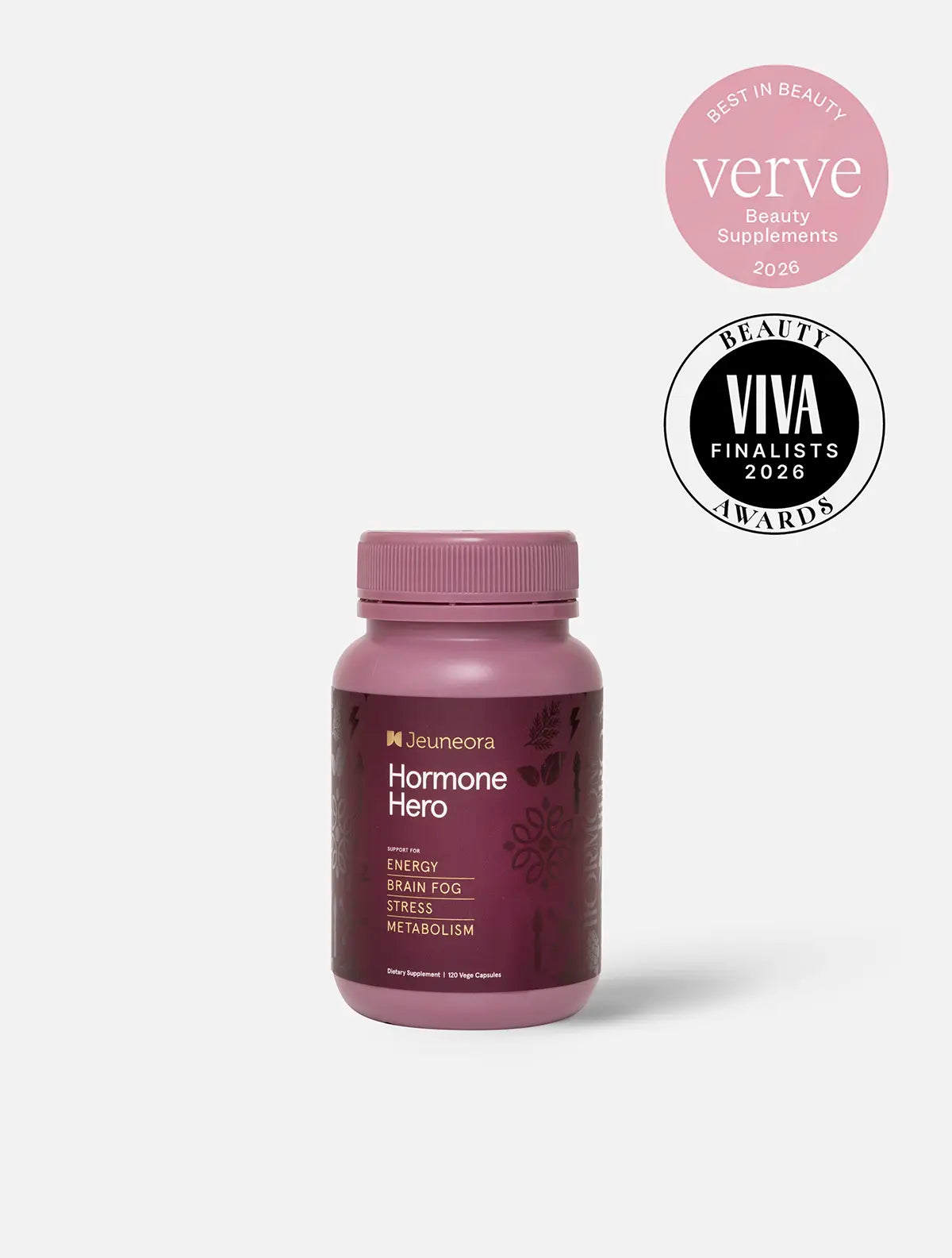
Jeuneora Hormone Hero. Our own, so bias declared. Built for estrogen dominance symptoms (PMS, perimenopause, hormonal acne, cravings) using chaste berry, shatavari and globe artichoke. Designed to be suitable alongside HRT (check with your healthcare provider first), taken as four capsules each morning. A finalist for Best in Wellness at the Viva Beauty Awards 2026. Not suitable during pregnancy.
NuWoman 30 PLUS. A long-standing NZ brand built around black cohosh with B vitamins and amino acids. A solid choice if temperature symptoms and mood are your main battle.
Good Health Peri Meno+. A herbal blend of hops, fenugreek, black cohosh, ashwagandha and sage aimed at the full menopausal transition, particularly temperature balance and sleep.
BioBalance Peri Meno Peace. A naturopath-formulated blend of DIM, black cohosh, kelp-sourced iodine and active B6, aimed at hot flushes and night sweats alongside mood and stress resilience.
Clinicians Women's Hormone Support (DIM). A practitioner-grade, single-focus option using DIM to support healthy estrogen metabolism, often paired with magnesium or B6 to match your symptoms.
GO Healthy GO Hormone Support. Combines vitex and black cohosh with magnesium, B6 and maca. A broad-spectrum option at pharmacy price points.
BePure Cycle Calm and MenoCalm. Cycle Calm pairs vitex and ashwagandha for cycle regularity and progesterone support in earlier perimenopause; MenoCalm is BePure's later-transition option for classic menopausal symptoms.
How long do perimenopause supplements take to work?
Give any hormone-support supplement a fair trial of 8 to 12 weeks. Botanicals like vitex work by supporting your body's own signalling, which takes at least two full cycles to shift. Some benefits (calm, sleep) can show earlier; cycle and mood changes take longer. If nothing has changed after three months, that product isn't your answer.
When should you see a doctor instead?
Supplements support, they don't diagnose. See your GP if you have very heavy or prolonged bleeding, bleeding between periods or after sex, severe mood changes, or symptoms significantly affecting your life. HRT is safe and effective for many women and isn't a last resort. The best outcomes usually combine medical guidance with lifestyle and targeted supplementation.
FAQs
Can I take a perimenopause supplement with HRT?
Often yes, but it depends on the product. Hormone Hero is designed to be suitable alongside HRT; always confirm with your healthcare provider first.
What's the difference between a perimenopause and a menopause supplement?
Perimenopause products target fluctuating hormones and cycle symptoms (vitex-based). Menopause products target estrogen decline, especially hot flushes (black cohosh-based). Buy for the stage you're in.
Are these supplements safe during pregnancy?
No. Hormone-supporting botanicals like vitex and black cohosh are not designed for pregnancy. If there's any chance you're pregnant, stop and talk to your midwife or doctor.
Do I need a blood test first?
Hormone blood tests during perimenopause are often unhelpful because levels swing daily. Doctors in NZ typically diagnose on symptoms and age. A test can still rule out thyroid issues, which mimic perimenopause.